NIPISLumban, Laguna

Barong Tagalog · piña at jusi · sa kamay

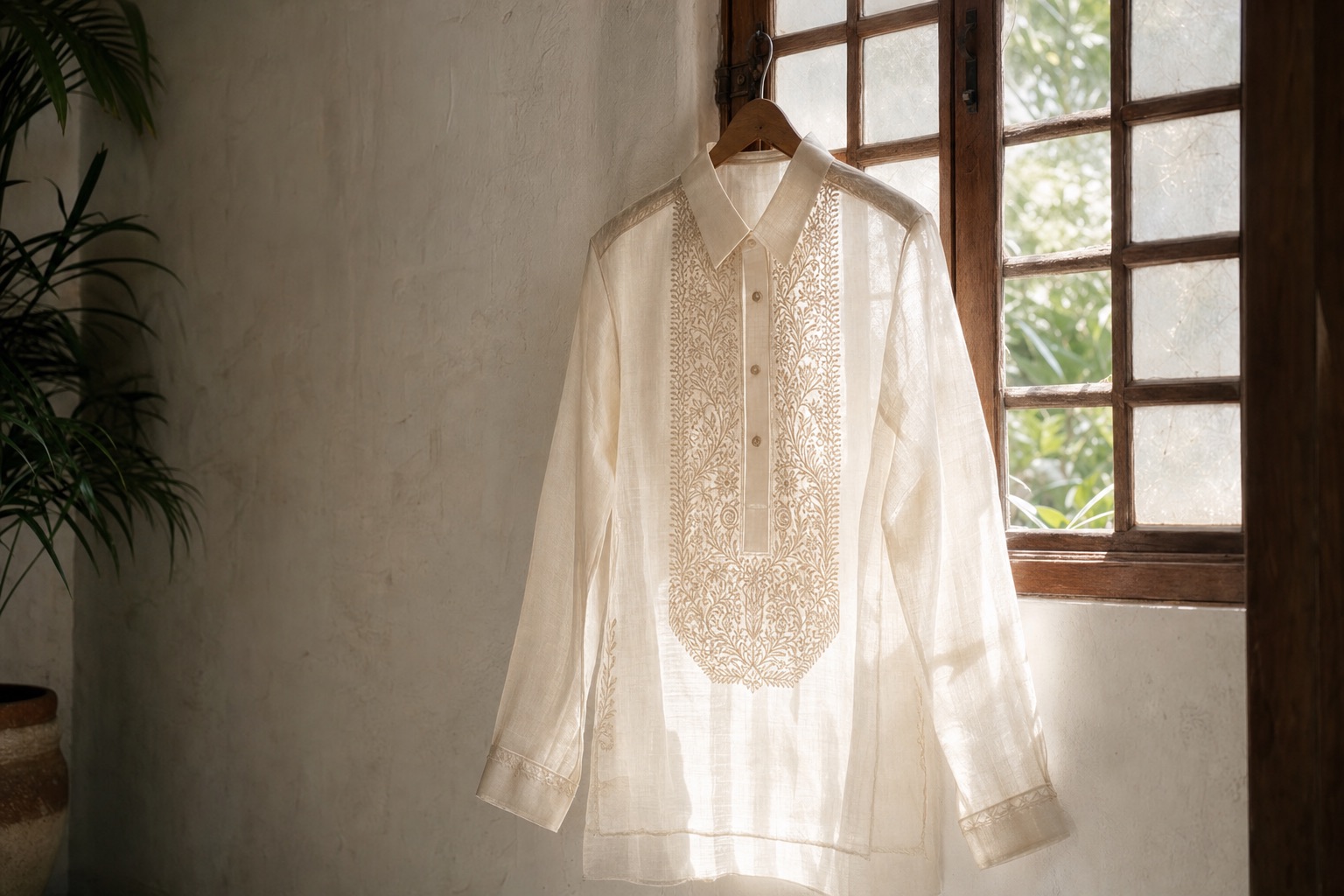
The only formal garment in the world made to be seen through.

Every other formal tradition hides its construction. A barong is worn untucked, unlined, over a plain undershirt, in a cloth thin enough to read a window through. There is nowhere to put a bad seam. Two of us work here: one cuts, one embroiders.

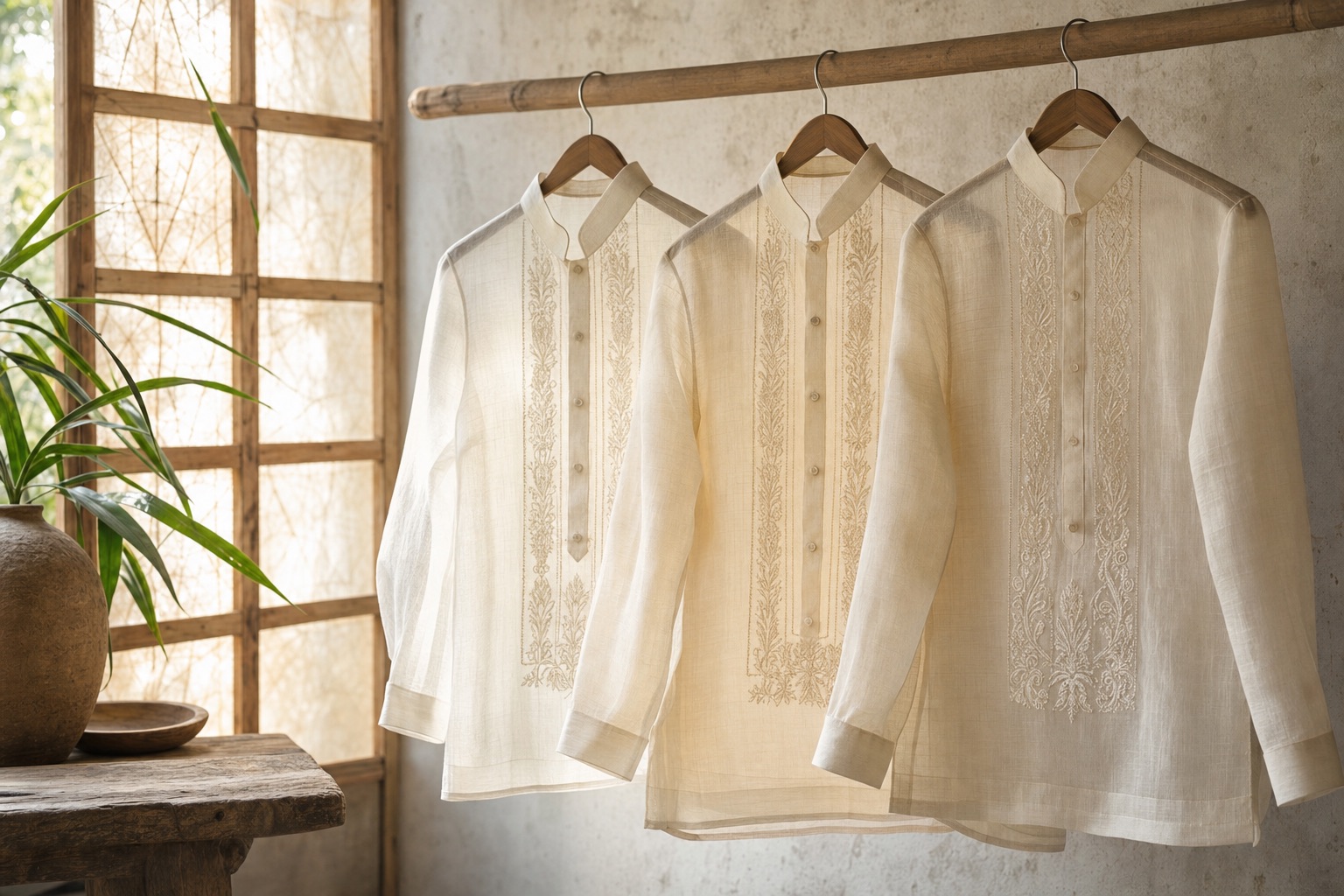
A finished barong on a wooden hanger held against a bright capiz-shell window; daylight passes through the cloth and the embroidered front panel reads as shadow.
No. 214 held to the window on Calle Rizal. The panel is not printed on the cloth — it is the light coming through it.

01 — Ang hibla

The fibre

Kalibo, Aklan · 620 km south of this bench

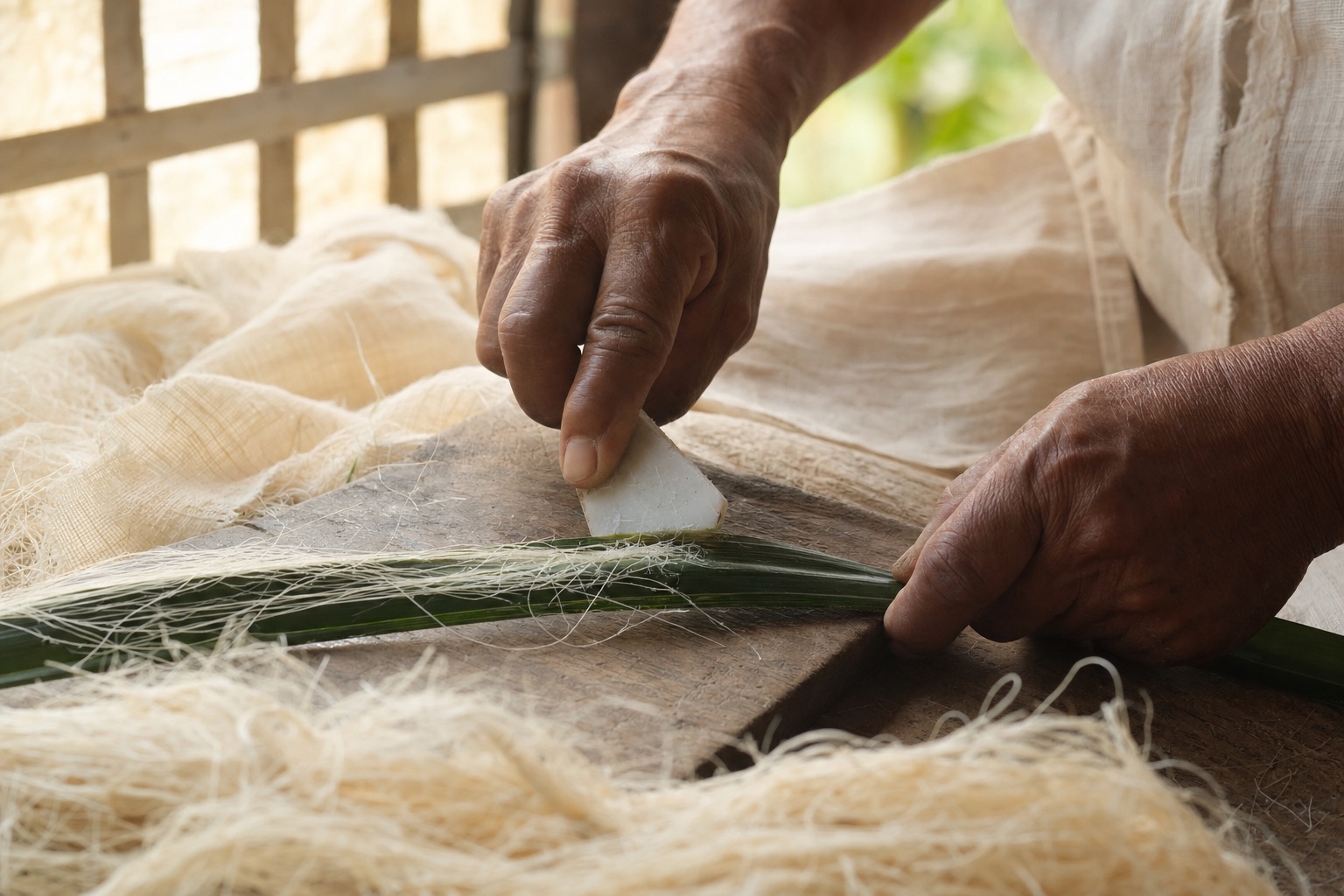
Piña is scraped, not spun. A worker draws a shard of broken porcelain down the length of a red Bisaya pineapple leaf until the pulp is gone and only fibre is left — this is kiskis. What survives is sorted into two grades, and the difference between them is the difference between a shirt and an heirloom.

A craftsman's hands drawing a porcelain shard along a green pineapple leaf, separating pale hair-fine fibres.
Kiskis — one leaf yields about a gram of usable fibre.
Liniwan
the fine grade, from the upper layer of the leaf
Hair-fine and nearly translucent. Knotted end to end by hand — never twisted — so the thread stays flat and takes light. A weaver gets through roughly 40 metres a month, on a good month.
Bastos
the coarse grade, from beneath
Stronger, shorter, and a shade darker. It goes into the warp where it will be under tension, and into cloth that has to survive being worn twice a week.

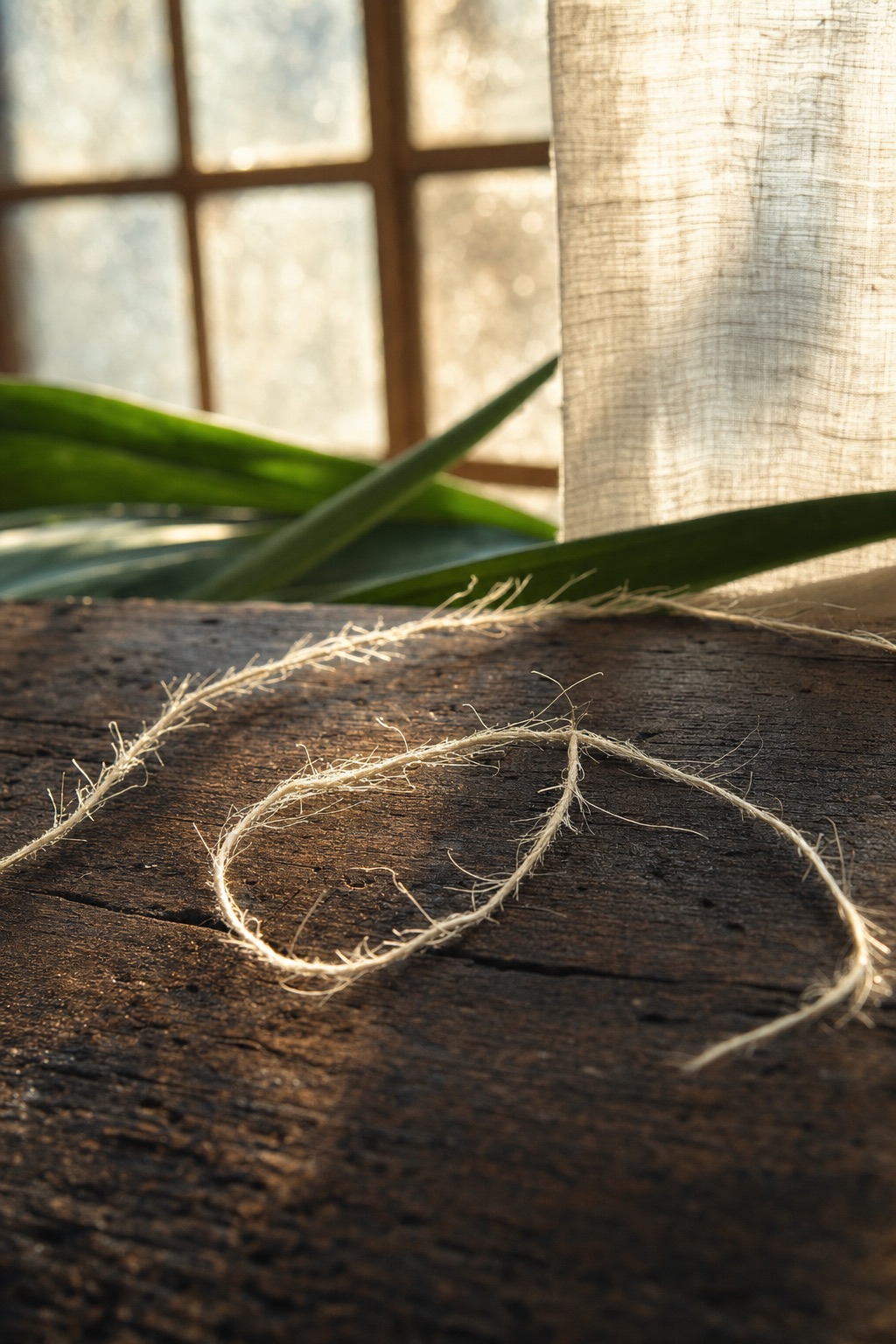
Macro view of hair-fine pale pineapple fibres knotted end to end into a continuous thread on dark hardwood.
Every metre of thread is a few hundred hand-tied knots.
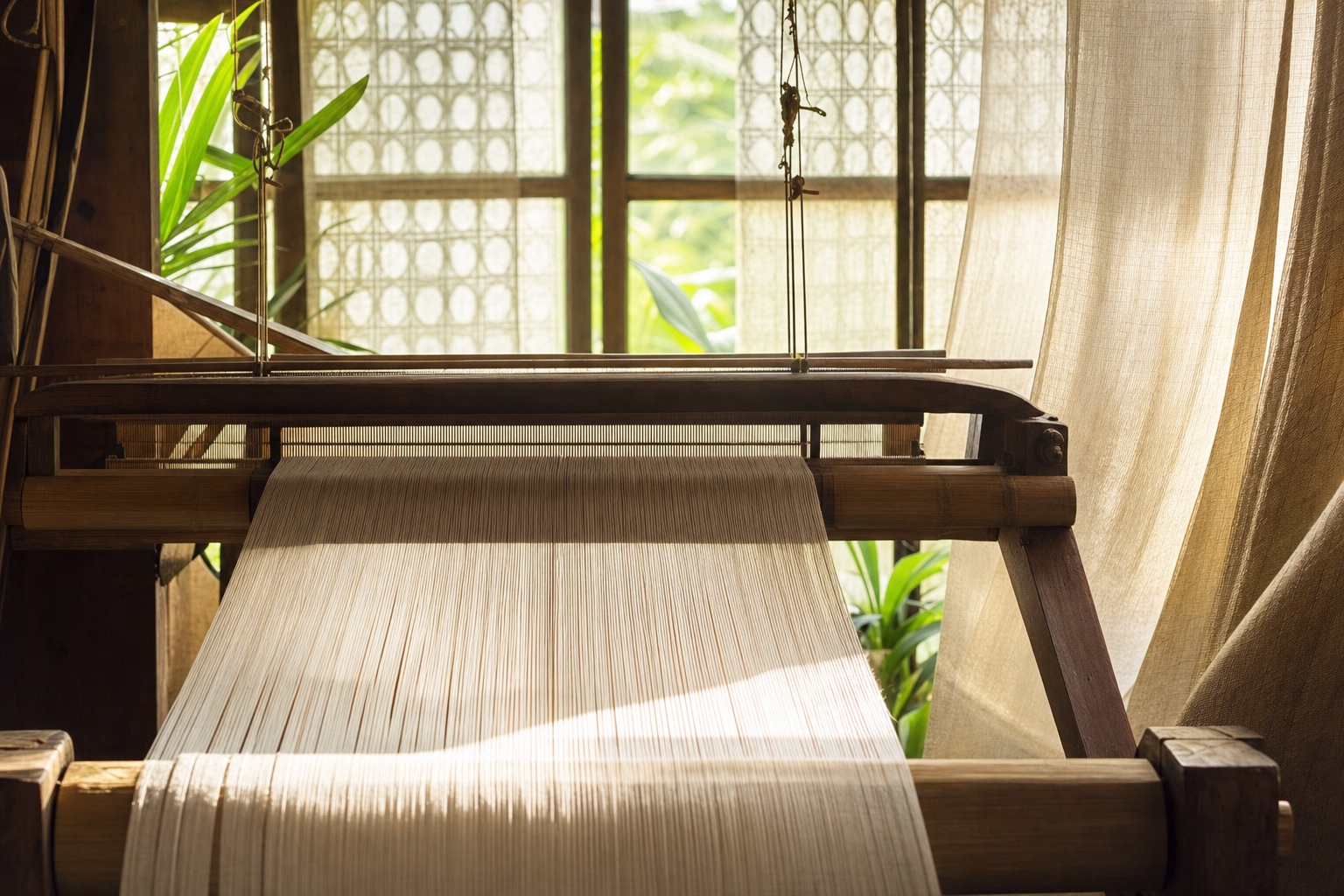
A wooden handloom strung with a warp of pale pineapple fibre, seen against a bright window so the threads glow.
The warp on the loom at Kalibo. Piña is woven slowly and damp — dry fibre snaps, and a snapped warp thread is a visible scar in a cloth this sheer.

02 — Ang pechera

Draw your panel

The embroidered front · the whole commission in one decision

The pechera is the embroidered front of a barong, and it settles everything — the cloth, the months of waiting, the price. Change any of the four below and the panel is redrawn. Watch the cloth: the sheerer the grade, the more the shirt beneath it reads through, and the more the reverse-side shadow work shows.

The pechera as specifiedPiña-seda · Sampaguita · Kasal · calado 3/5 · panel drop 45 cm · ~108 hours at the needle

The tone behind the cloth is the camisa de chino worn under every barong. How much of it you can see is the cloth grade doing its work.

Tela — the cloth

Piña across a silk warp. Half the cost of pure piña and most of the light.

Motif — the burda
Okasyon — how far the panel runs
Calado — how much ground is cut away
Solid ground3 / 5Open lattice
Cloth
Piña-seda
Panel drop
45 cm
At the needle
108 hours
Ready in
about 11 weeks

₱47,500about $810

“Begin this barong” — carries this specification into the order below.

03 — Ang burda

Three hands, three names

What the needle actually does to a sheer cloth

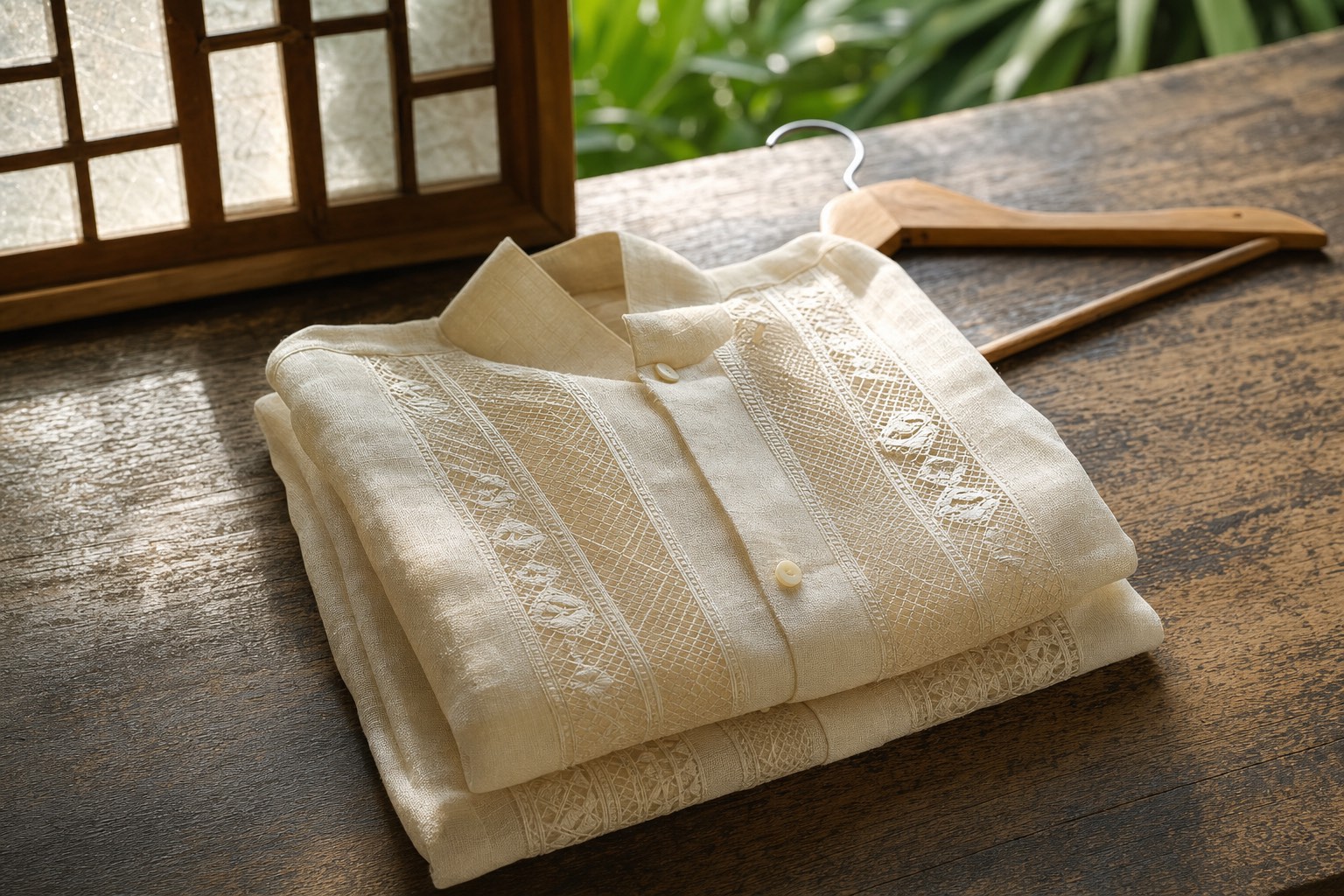
None of these are stitches applied on top of the cloth. Each one alters the weave itself — which is why a barong panel cannot be unpicked and started again.

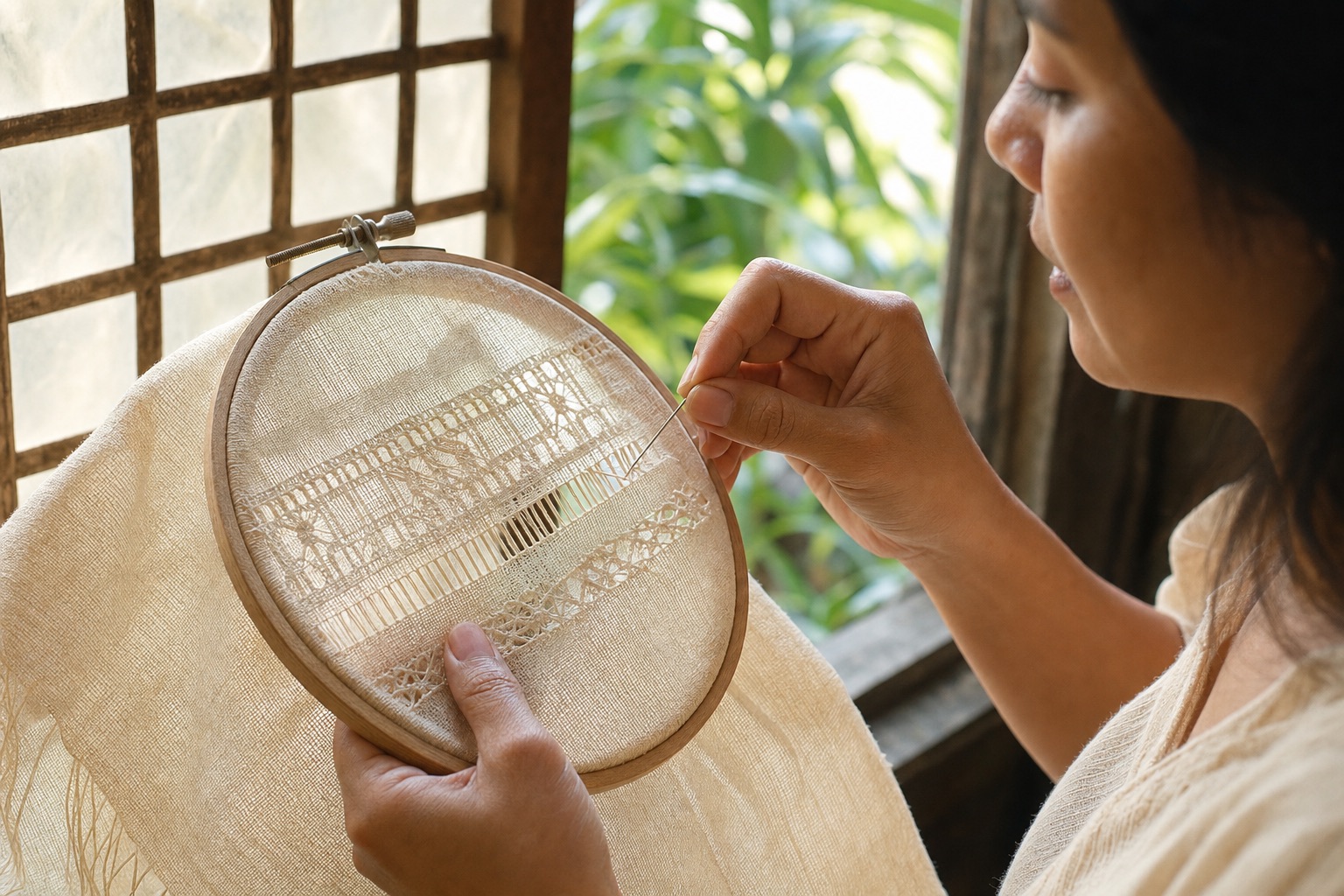
An embroiderer's hands and needle working drawn-thread openwork on sheer cloth stretched in a round wooden frame near a bright window.
Estrella works a frame at the window all morning and moves as the light does.
Calado
drawn-thread openwork
Threads are drawn out of the woven ground and the survivors whipped into a lattice. The ornament is the absence — which is why a calado panel cannot be corrected. A cut thread is gone.
Sombrado
shadow work
Worked on the reverse of the cloth. Because the ground is sheer, the thread reads through it as a soft grey shadow rather than a line — the only embroidery designed to be seen from the wrong side.
Deshilado
drawn threadwork
The bands that edge a panel: threads withdrawn in a strip, then bundled and knotted into a rail. It is what stops the calado field from unravelling into the rest of the shirt.
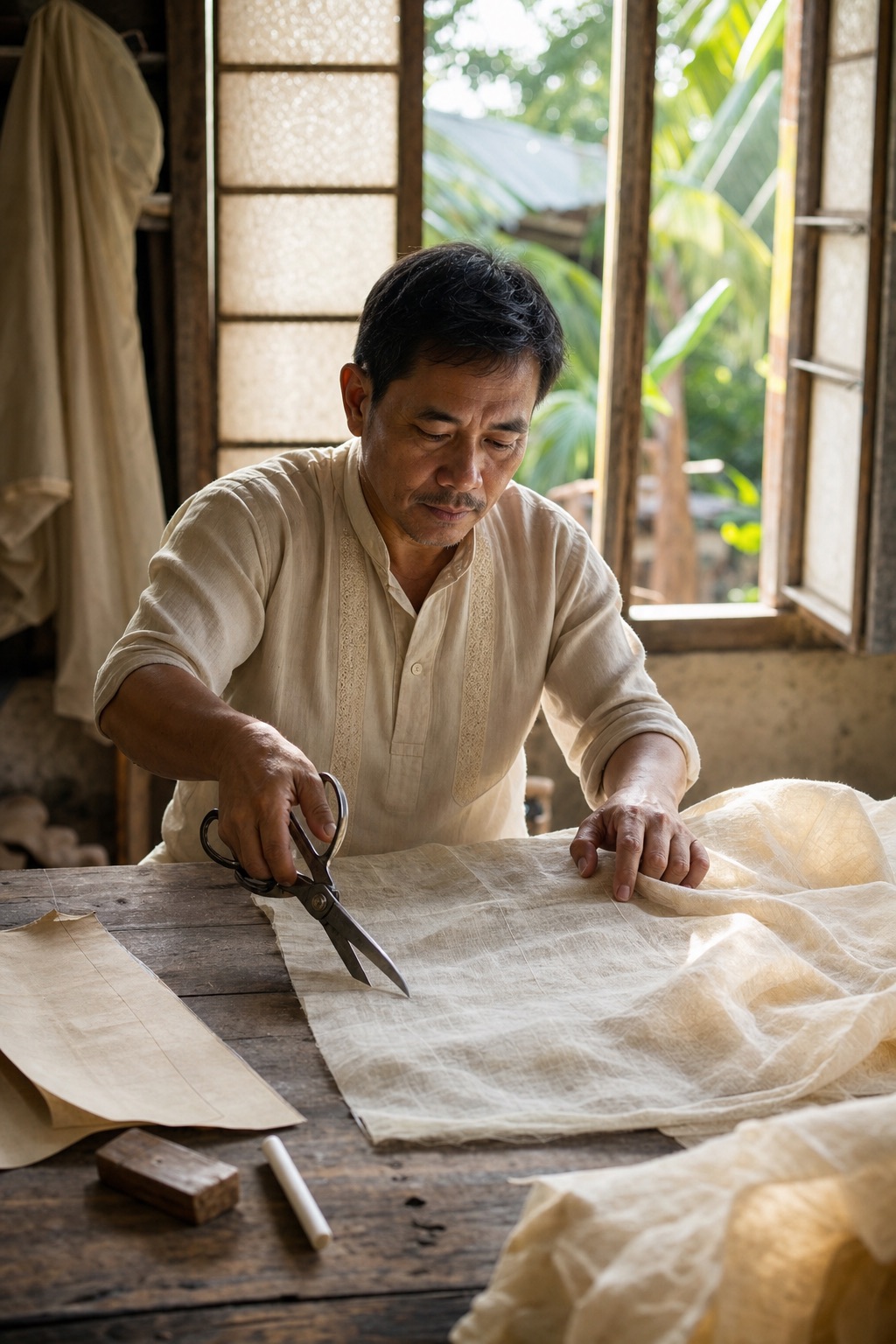
A tailor at a wooden bench with steel shears, laying out a cut panel of sheer cloth beside chalk and a paper pattern, lit by a broad window.

04 — Ang mananahi

Rodel cuts. Estrella embroiders.

They have worked the same two benches on Calle Rizal since 1998. Rodel was taught to cut by his father, who cut for the municipality; Estrella learned calado at eleven, from her grandmother, on scrap jusi.

The division is absolute and slightly comic: Rodel will not put a needle to a panel, and Estrella will not touch the shears. A barong passes between them three times — cut, embroidered, assembled — and neither will sign off on the other's work until it has been held to the window on the landing.

They finish between 28 and34 barong a year. Six of those are full state-occasion panels, because six is what Estrella's hands will do.

05 — Ang aparador

On the rack now

Finished, unclaimed, alterable

Three barong finished for commissions that changed. Each can be altered to a nearby measurement — a sleeve and a hem are easy, a chest is not. Written to us, they leave the same week.

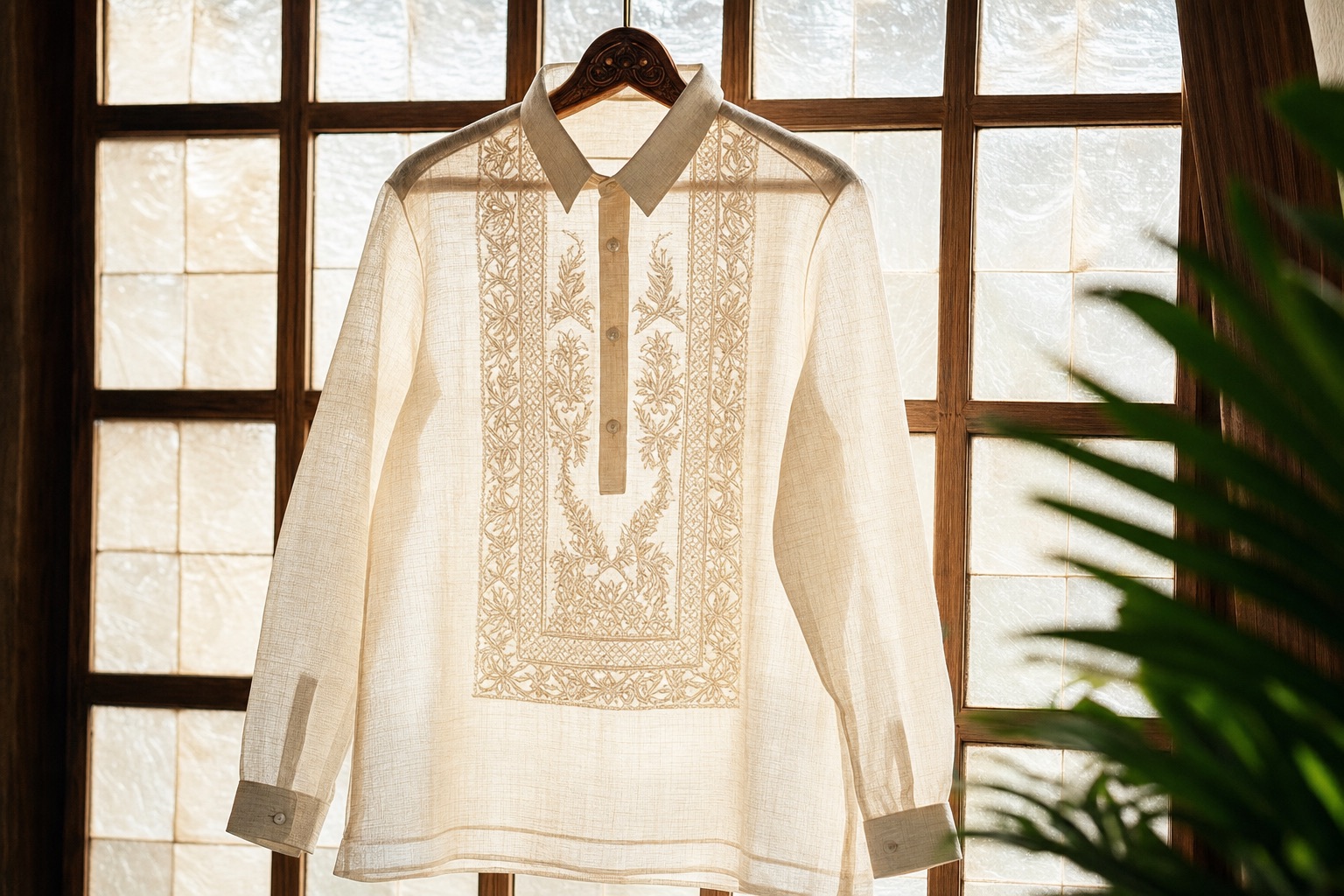
No. 214 — a finished barong in Piña liniwan hanging in daylight, its embroidered panel reading as fine shadow.

No. 214

Piña liniwan · Espiga

Cut for a wedding in Taal and never collected. Espiga worked in a single ivory thread on the sheerest grade we have — at this weight the spike reads as much by its shadow as by its stitch.

Cloth
Piña liniwan
Sukat (cm)
Chest 104 · sleeve 62 · nape-to-hem 76
Work
212 hours at the needle
Price
₱96,000
Tanungin — ask about No. 214
No. 219 — a finished barong in Piña-seda hanging in daylight, its embroidered panel reading as fine shadow.

No. 219

Piña-seda · Sampaguita

The vine run full length, flowering nine times a side. Piña across a silk warp, which is why it falls straighter than pure piña and why it forgives a humid church.

Cloth
Piña-seda
Sukat (cm)
Chest 98 · sleeve 60 · nape-to-hem 74
Work
148 hours at the needle
Price
₱62,400
Tanungin — ask about No. 219
No. 221 — a finished barong in Jusi hanging in daylight, its embroidered panel reading as fine shadow.

No. 221

Jusi · Calado puro

No figurative motif at all — the whole panel is drawn-thread lattice, four threads out and four whipped, across a jusi ground. The plainest thing on the rack and the hardest to keep square.

Cloth
Jusi
Sukat (cm)
Chest 100 · sleeve 61 · nape-to-hem 75
Work
96 hours at the needle
Price
₱28,800
Tanungin — ask about No. 221

06 — Magpatahi

Have one made

Literally: to have something sewn

This is an order request, not a checkout — no card, no payment here. Rodel reads it, checks the calendar against your date, and writes back within a week with a total and a deposit. Nothing is cut until you have replied to that.

Ang barong

Pre-filled from the panel you drew above. Change anything.

Ang sukat — the measurements

In centimetres, over a thin shirt, not pulled tight. If you would rather not: post us a shirt that fits you well and we will measure it and send it back. We prefer this.

Kailan — when it is needed

The panel decides the wait. A state-occasion pechera is five months of needle and we will say so plainly if your date does not work.

Kayo — you

Opens your mail programme with the order written out. No payment is taken on this page.